
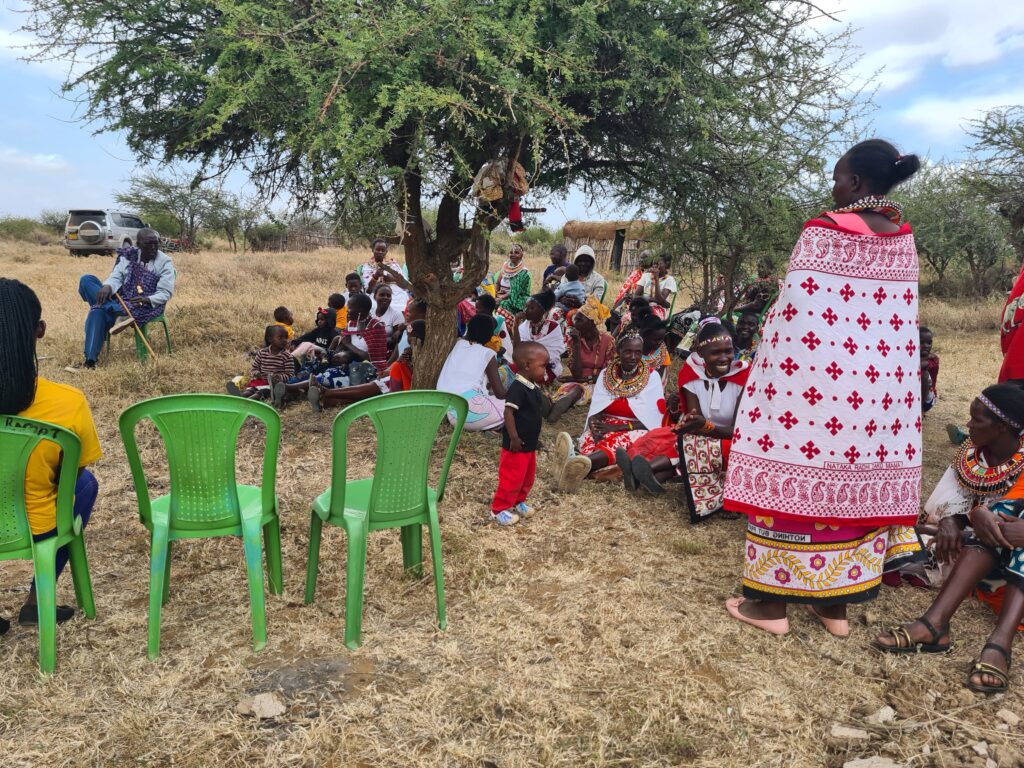
In the old days, the Maasai gathered beneath the tall acacia tree for meetings, dances, and blessings. The tree gave shade for the people, flowers for the bees, and branches for firewood. But as years passed, many acacia trees were cut down. The land grew bare, the soil cracked, and even the cattle grew thin.
One evening, a young warrior named Lemayian sat with the elders. He had a gift for singing, and he worried about the loss of the trees. That night, he dreamed of the acacia tree itself speaking to him:
“Child of the plains, sing for me,
So your children may sit under my shade,
So the bees may drink from my flowers,
So the land may stay green and alive.”
When Lemayian awoke, he remembered every word. He turned the dream into a song, adding rhythms of the drum and steps of the warrior dance. At the next community gathering, he sang:
🎵 “Plant the tree, guard the tree,
Shade for the cattle, shade for the child.
Without the tree, the land is dry,
With the tree, the land will live.” 🎵

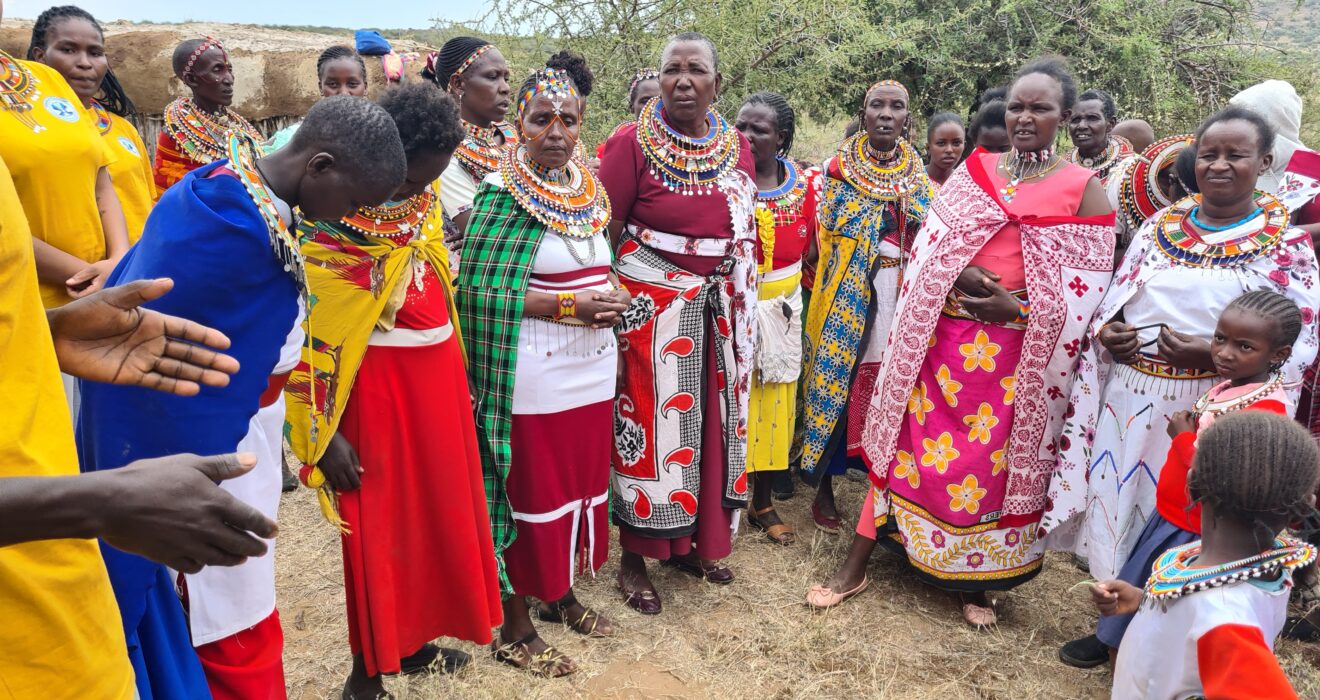
The song was simple, but it touched everyone. Children learned it quickly, women added harmonies, and warriors danced in a circle, stamping their feet like raindrops on the soil.
Soon, the song became part of ceremonies sung before marriages, during cattle blessings, and even at community meetings. With each performance, people remembered to plant trees, protect saplings, and teach their children the value of the acacia.
Over time, the hills of Kajiado began to turn green again. And though Lemayian grew old, his song never faded for it lived on in every child’s voice, every dancer’s step, and every tree that reached toward the sky.